Category: Bpo services

  • The Future of Online Data Entry: Trends Shaping 2025

    The Future of Online Data Entry: Trends Shaping 2025

    As we sail through 2025, online data entry has unlocked some interesting trends that organizations must utilize for effective data management. Like in every industry, data entry services also witness rapid transformations in how experts approach processes. Moreover, adopting modern tools and techniques into the workflow is crucial to stay relevant in the changing era. In this case, organizations should be aware of the tools and approaches online data entry solutions incorporate in their projects. Through this blog, let’s explore the trends shaping the future of data entry in 2025.[boc_spacing height=”20px”]

    Future of Online Data Entry

    Trends in Online Data Entry Services for 2025

    1. Increased Adoption of AI and Automation – AI and automation are already revolutionizing online data entry services. By using AI-enabled tools, organizations can minimize human intervention, reduce errors, complete tasks quickly, and improve the overall efficiency of processes. We are already aware of the use of OCR (Optical Character Recognition), RPA (Robotic Process Automation), and NLP (Natural Language Processing) in data entry. As 2025 unfolds, the integration of such technologies increases and streamlines the process of data collection and data processing. This way, organizations become efficient in handling large volumes of data with minimal manual efforts and less turnaround times.[boc_spacing height=”20px”]
    2. Cloud-Based Solutions at the Center Stage – Cloud-based storage solution is one of the notable trends in online data entry services 2025. Cloud technology is transforming data entry by offering secure, scalable, and centralized data entry solutions. Furthermore, cloud data processing solutions provide real-time, active collaboration of team members through a single platform, from anywhere in the world. Most organizations have already adopted cloud data entry services through outsourcing. In 2025, cloud computing will become one of the vital data entry trends as it marks significant changes in the data processing realm.[boc_spacing height=”20px”]
    3. Expansion of Mobile Data Entry – Nowadays, data entry is also possible through mobile devices. With smartphones becoming more powerful and having advanced features, professionals can conveniently carry out online data entry through mobile phones. Industries offering healthcare, logistics, and field services increasingly rely on remote data entry. Here, mobile phones are substantial media for carrying out data entry. This way, organizations can reduce their dependency on desktop devices and carry out data entry tasks on mobile devices. Indeed, this is going to be one of the remarkable trends in online data entry services 2025.[boc_spacing height=”20px”]
    4. Increased Focus on Compliance and Data Security – Data security becomes a top priority of businesses as they handle vast volumes of accumulated data. By integrating data protection measures and following data privacy regulations, companies can ensure high levels of data security. In 2025, automated data entry will be carried out more consciously, with a focus on compliance and data security.[boc_spacing height=”20px”]
    5. Blockchain in Data Entry – Blockchain technology may become a game-changer for online data entry solutions. It provides a tamper-proof and decentralized ledger for storing and verifying information records. This is one of the data entry trends that are highly useful for industries like finance, supply chain, and healthcare. Moreover, blockchain technology enables automated data validation, further reducing fraud risks.[boc_spacing height=”20px”]
    6. Quantum Computing; An Emerging Frontier – While still in its early stages, quantum computing holds a promising future in online data entry. Quantum computing aids in data processing by quickly processing data, analyzing it in real-time, and flagging errors. Although research and experimentation continue, businesses have already taken steps to unlock its potential.[boc_spacing height=”20px”]
    7. Data as the Product Approach – This approach is going to be one of the crucial data entry trends for 2025. With data as the product approach, organizations consider data to be the main product rather than the byproduct of their operations. This approach is relevant mainly in industries such as mobile app development, finance, and healthcare. In addition, data as a product approach is a way for organizations to utilize and monetize data. That is, organizations utilize insights into customer behavior and experience through the data they possess and use them for strategic decision-making. This way, data is transformed into a valuable asset rather than a tool for operation.[boc_spacing height=”20px”]
    8. Less Integration of Multiple Systems – In 2025, the use of multiple systems to carry out processes in data entry may become outdated as organizations are increasingly shifting towards systems that can handle a broad range of tasks. This way, organizations can facilitate automated data entry without spending hours integrating systems. This is one of the major trends in online data entry services 2025 that is going to transform the procedures in data processing.[boc_spacing height=”20px”]
    9. Rise of Remote Data Entry – The shift towards remote data entry is one of the considerable trends in online data entry services 2025. In fact, businesses are increasingly hiring remote data entry professionals and freelancers to take care of their data. This way, organizations can reduce costs and turnaround times and ensure 24/7 assistance across different time zones. Moreover, adopting remote data entry enables organizations to access expertise while offering flexibility to workers.[boc_spacing height=”20px”]

    The Bottom Line

    The future of data entry is going to be reshaped by emerging technologies and refined approaches. Businesses that invest in such initiatives today will gain competitive advantages that boost business success. Moreover, adopting emerging trends is crucial for organizations looking to optimize their data management processes. To optimize your automated data entry efforts, collaborate with a reliable online data entry service provider.

    Struggling to find the best online data entry services? Look no further, contact us at [email protected] and invest wisely in technologies to navigate through the future of data entry![boc_spacing height=”20px”]

  • Why Outsourcing Data Entry Services is a Game-Changer for the Retail Industry

    Why Outsourcing Data Entry Services is a Game-Changer for the Retail Industry

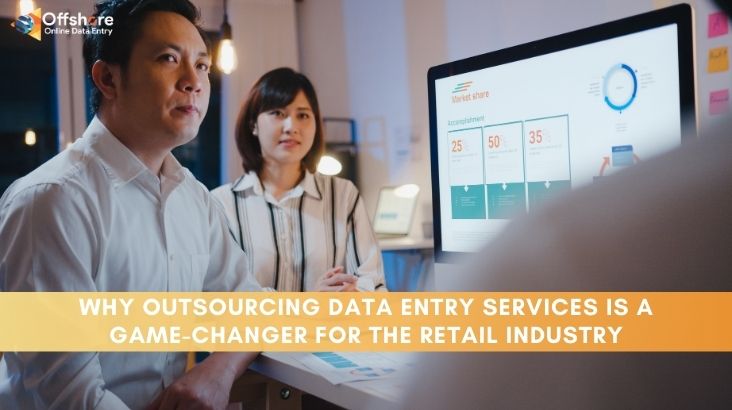
    Like every other sector, the retail industry also relies heavily on accurate and updated data. From inventory management to customer records, retail data entry is essential to manage internal operations effectively. Although it is a principal task, there will be vast amounts of data to be entered. Thus, handling it by in-house teams can be expensive, error-prone, and take long hours. That’s where data entry services for the retail industry come into play. With retail data entry outsourcing, businesses can unlock a plethora of advantages, such as streamlined internal operations, better inventory management, and much more. This blog focuses on why outsourcing data entry services is a game-changer for the retail industry. [boc_spacing height=”20px”]

    Outsourcing Data Entry Services

    Key Benefits of Retail Data Entry Outsourcing [boc_spacing height=”20px”]

    1. Smooth Inventory Management – For the success of every retail organization, effective inventory management is essential. Through retail data entry solutions, organizations can ensure optimal stockings and stay updated on the availability of products. In that case, firms can reduce errors in stock details and optimize supply chain operations.[boc_spacing height=”20px”]
    2. Streamlined Internal Processes – As retail businesses rely heavily on data, internal operations can be streamlined by data entry outsourcing services. BPO for retail services inputs updated data on orders, product catalog management, and employee and vendor records. This allows organizations to utilize resources efficiently, streamline internal processes, and reduce administrative burdens.[boc_spacing height=”20px”]
    3. Better Decision-making with Updated Data Analytics – Data plays a crucial role in understanding market trends, customer behavior, and purchase patterns. However, inaccurate or outdated data in possession can lead to poor decision-making. BPO for retail industry services allows organizations to access accurate and updated data. This updated data will be clean, structured, and ready to use. With precise data analytics from retail data entry outsourcing services, retailers can make informed decisions without stumbling in critical scenarios. This can also help in tailoring better pricing strategies and marketing efforts.[boc_spacing height=”20px”]
    4. Improved Sales Graph with Customer Insights – Understanding customer behavior is crucial for the retail industry. By outsourcing retail industry services, organizations can input updated customer information and tailor personalized shopping experiences that keep customers coming back. Moreover, retail organizations can analyze market trends, understand purchase patterns, optimize product placements, and improve sales conversion rates. In fact, data-driven marketing and sales activities can enhance organizational performance and attract new customers.[boc_spacing height=”20px”]
    5. Financial Benefits – Hiring a data entry team for in-house data entry is expensive. This is because while setting up an office space, they need to rent out additional space and install and maintain resources such as costly software, hardware, product subscriptions, infrastructure development, employee benefits, and training. However, all these expenses can be eliminated by outsourcing data entry services for the retail industry. Furthermore, retail data entry outsourcing provides organizations with pay-as-you-go models in which businesses are not bound to pay additional expenses rather than services availed.[boc_spacing height=”20px”]
    6. Scalable Service Options – BPO for retail offers scalable outsourcing services. That is, depending on market demands, retail organizations can scale up or down operations. For instance, retail organizations witness a sudden surge in sales activities in seasons like Christmas, Black Friday, and back-to-school. In this case, managing data entry along with in-store activities can be exhaustive. By outsourcing retail data entry solutions, organizations won’t sink into inefficiencies or fall behind because of the unavailability of resources. Scalability is a crucial aspect that is highly beneficial for retailers and e-commerce businesses, as customer needs and market demands change rapidly. [boc_spacing height=”20px”]
    7. More Focus on Strategic Functions – Although effective data entry is vital for the proper functioning of retail organizations, investing a lot of time in it keeps employees away from focusing on core areas. This can significantly affect business development areas such as strategy building, market expansion, and new product launches. Moreover, to tackle today’s competitive business world, retail firms need to implement innovative measures to make them uncommon and remarkable. With retail industry services, organizations can allocate their employees to productive tasks rather than tangled between burdensome tasks like data entry.[boc_spacing height=”20px”]
    8. Data Security Benefits – Retail organizations possess large amounts of sensitive customer data.  These data contain information about customers, such as contact numbers, email addresses, and other personal details. Unauthorized access and data leaks can critically affect the customer’s privacy and damage the reputation of firms. Nonetheless, outsourcing data entry services for the retail industry eliminates such risk factors. Furthermore, retail data entry solutions incorporate strong data security measures and follow regulatory practices to provide highly secured services.[boc_spacing height=”20px”]

    Conclusion

    Tackling today’s competitive retail industry is not easy. However, with BPO for retail sector, it is achievable. Outsourcing data entry services for the retail industry is a thoughtful strategy for firms looking to streamline organizational operations. By partnering with trusted retail data entry services, organizations can access expertise without hiring full-time employees, save massive amounts, and attain services of world-class quality.

    If you are looking to gear up your data entry game with active collaborations with a retail data entry service provider, contact us at [email protected]!

  • The Growing Role of Data Processing in Banking and Financial Institutions

    The Growing Role of Data Processing in Banking and Financial Institutions

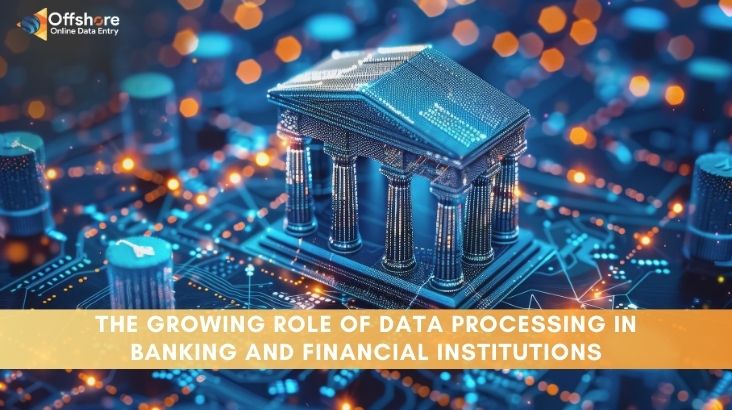
    Banks and financial institutions possess vast amounts of data, including customer information, transaction details, and other stored information. But what about managing them efficiently? As data accumulates daily, banks and financial institutions have embraced data processing services, an essential business process outsourcing solution that aids in finance data management. Data processing services for banking and financial institutions analyze, cleanse, and organize the extracted information seamlessly. This blog explores the growing role of financial data processing for banking and financial institutions and how it is reshaping the industry.

    Role of Data Processing in Banking and Financial Institutions

    Support Digital Transformation

    For banking and financial institutions, financial data processing is a key enabler of digital transformation. As banking became digital, vast amounts of data were created through activities in mobile banking. With data processing services, banks manage heaps of data with less downtime. Additionally, the cloud-based data processing platforms allow financial institutions to scale their services. This way, financial institutions can handle large and small volumes of data, even during peak times. Moreover, cloud solutions enable them to offer digital experiences to customers, including online transactions and real-time updates.

    Faster Extraction of Useful Data

    The data from the physical and online sources these institutions possess will be in raw form and thus require formatting. If a banking or financial institution decides to process data, it will be a laborious task that needs the attention of employees. However, data processing in banking converts data into useful information faster within the given time frame. This way, banking data solutions help companies acquire processed and organized data efficiently and seamlessly.

    Fraud Detection and Prevention

    Data Processing Services for Banking and Financial Institutions are crucial for detecting and preventing fraud. With the rise of online banking, fraudulent activities also have risen. With data automation in finance, companies can analyze vast amounts of transactional data and identify suspicious patterns. Afterward, these systems check for unusual transactions and unauthorized access to accounts. Once they find it, the system flags a potential scam and takes necessary actions before they cause harm.

    Data-driven Decision Making

    Data processing in banking allows institutions to make informed decisions utilizing data. This way, organizations can improve their profitability and work towards providing seamless customer services. By processing data from various sources, such as customer transactions, financial markets, and economic indicators, financial institutions can gain valuable insights into upcoming market trends, investment opportunities, and potential risks. Moreover, being aware of these can make organizations create impactful marketing campaigns and aid in product development. Also, data-driven decisions enable organizations to stay competitive and adapt themselves to changing market conditions.

    Uninterrupted Data Management

    Finance data management is essential for the efficient functioning of organizations. As banks create vast amounts of data daily, it is necessary to process them. By leveraging cloud-based data processing platforms and data automation in finance, organizations can manage and process large volumes of data 24/7. This allows financial institutions to continue essential operations uninterrupted and maintain the quality of their services.

    Real-time Financial Analytics

    Financial data processing allows companies to analyze data in real time. This way, organizations can respond quickly to market changes, customer requirements, and finance related risks. With updated analytics, banking data solutions can provide instant services such as account balances and financial advice. This not only improves customer satisfaction but also helps in managing cash flow.

    Streamlined Financial Operations

    Data automation in finance helps to improve the operational efficiency of firms. That is, data processing services for banking and financial institutions help process millions of transactions and financial records with less downtime than by using traditional methods. Moreover, by leveraging advanced algorithms and automation tools, firms can process vast amounts of data with minimal manual effort.

    Personalized Services

    Data processing in banking has transformed the way financial institutions approach and interact with customers. Once they go deep into the data, organizations gain valuable insights into transactional behavior, customer preferences, and financial goals. With this data, banks and financial institutions tailor personalized products and services such as loans and investment plans. This way, institutions can get to know their customers better and offer financial advice in real time, which leads to building a strong relationship with the customer base.

    Conclusion

    Data processing services for banking and financial institutions play a critical role in the finance industry. As the industry moves more towards digitization, data processing services are gaining momentum, improving risk management and compliance. With evolving technologies, banking data solutions will remain the backbone of the financial industry with advanced capabilities. In fact, data processing in banking not only enhances finance data management but also improves the financial services they provide. So, outsourcing to data processing services will be ideal if your organization is struggling to manage large volumes of data.

    Looking for data processing services for banking and financial institutions? Connect us at [email protected] for inquiries.